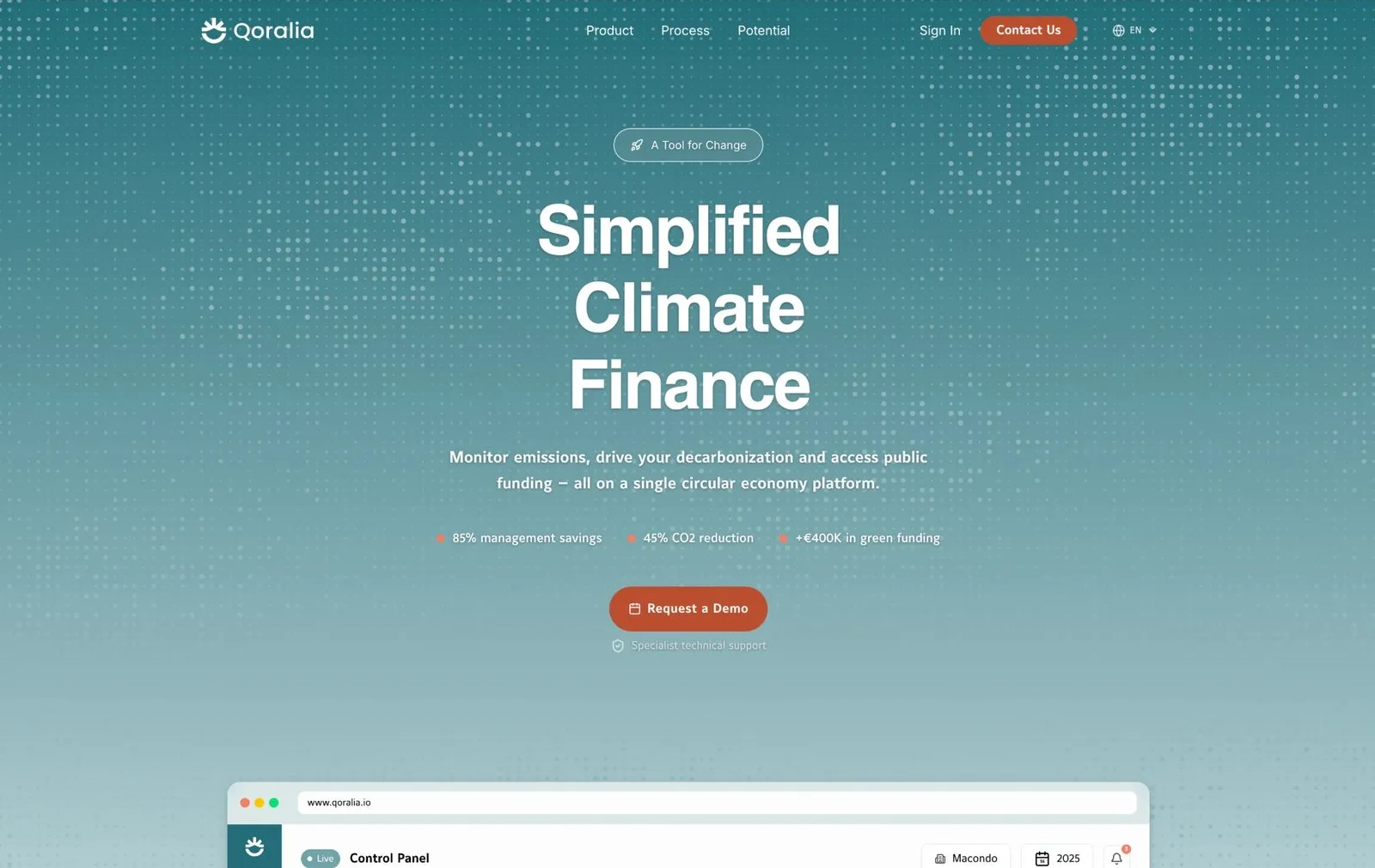
An AI-assisted workspace that searches regulations, grants, and intervention catalogs in seconds, scores grant eligibility, and models the cost, CO₂ impact, and feasibility of full emission-reduction pathways — with staged bulk emissions import and validation before data hits the books.
City officials planning emission reductions were stuck with scattered spreadsheets and consultant reports — no way to discover interventions, match funding, and model CO₂ impact in one place.
A model is good at finding candidate grants and interventions in a pile of regulations, but it can’t be the one that says a city qualifies: an official has to be able to defend that answer. And every city’s emissions data has to stay in its own workspace, checked before it counts.
- The model suggests, rules decideThe model surfaces candidate grants and interventions; deterministic scoring decides eligibility, and the UI shows which rule decided.
- Retrieval over climate sourcesRAG over regulations, grants and intervention catalogues in PostgreSQL + pgvector, behind an OpenRouter multi-model gateway.
- Whole pathways, not single projectsCost, CO₂ impact and feasibility are modelled across a full emission-reduction pathway.
- Staged data importBulk emissions data is staged and validated before it reaches the books.
- A workspace per cityMulti-tenant workspaces with role-based access, Auth0 sign-in and separate environments behind nginx.
- One workspace to find interventions, match funding and model CO₂ impact, instead of scattered spreadsheets and consultant reports.
- Eligibility answers an official can trace back to a rule, not just a model’s opinion.
- Each city’s team sees only its own data.